It wasn’t exactly my plan. But it happened.
A couple of months ago, I went on a solo trip to South Korea, Japan, and China. The trip was amazing; it was also tough in unexpected ways. When you spend three weeks alone with just your thoughts, you forget about the day to day, and start to unpack the things you’ve been putting off.
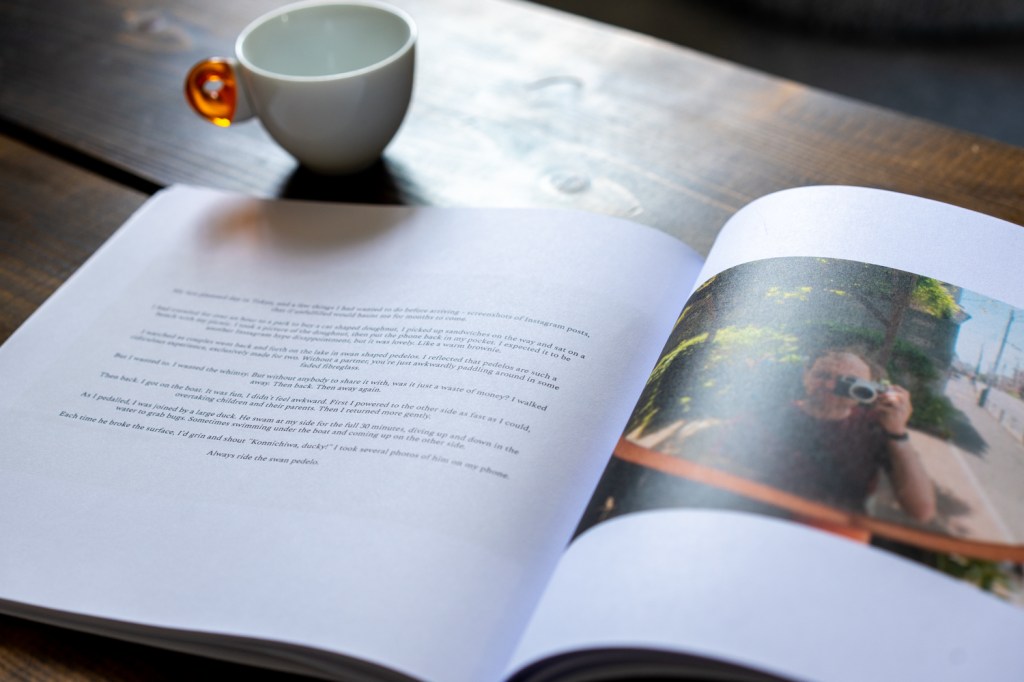
When I got back, I felt like the experiences and reflections needed preserving before I forgot them into the mists of normality. I decided to write a coffee table photo book to record some of the main events. As I wrote it though, it became apparent that this was less about the places I went and more about me. About the interactions I had with others, and my reflections upon them.
By the end of it, I’d written Please Remember, a 42-page book pairing my own photography from the trip with short personal essays exploring myself, the places, and the people I encountered along the way.
I’m not going to lie: sharing this is more than a little uncomfortable. It sits in some awkward spot somewhere between travelogue, poetry, and personal diary. Some of the pieces explore me at vulnerable moments. But the more I thought about it, the more that felt like the very definition of an art project. When I studied photography at college, we’d arrange photos on backing boards and I didn’t feel anything. This is different. My soul poured out onto the page, for you. The fact that it’s uncomfortable, and maybe embarrassing to share, is the art.
And if there somebody out there sat in a bath (read the book and find out!) working through something similar and this book helps you fell less alone, then it would all have been worth it.
I decided that for these reasons, I should be brave and share it anyway. (Mum, Dad: if you’ve found this, I’m asking you nicely. Leave it. Please)
I’m sharing this book not because I think the photos are my best work, or that you’ll like it. But because its personal nature is its very point. My discomfort is the book.
Oh, and I’ve also ordered a copy for my therapist. That should be an interesting session…
I’ve worked to get this as affordable as possible. The print quality isn’t the best in paperback form, but I think it’s better to be affordable and read than beautiful and unread. So if you’d like to pick up a copy (Mum. No. Not you, we discussed this already), I would be genuinely honoured.
It’s available now on Amazon, Thank you:
UK: https://www.amazon.co.uk/dp/B0H7S2L7DX
US: https://www.amazon.com/dp/B0H7S2L7DX


